Dashboard Updater
Dashboard Updater controls how often ManageEngine ADSelfService Plus refreshes the data behind its admin console dashboard, such as locked out users and soon-to-expire passwords. It runs scheduled tasks that refresh dashboard data and synchronize ADSelfService Plus with the directories it manages.
How this works
ADSelfService Plus does not query your directory every time the dashboard loads. Instead, each scheduler precomputes its slice of data (synchronized accounts, locked out users, soon-to-expire passwords, expired passwords) at the interval you configure and stores the result, so the dashboard renders quickly.
Limitations
- The set of schedulers is predefined. You can change each scheduler's frequency and enable or disable it, but you cannot add, rename, or remove schedulers.
Configuration instructions
- Log in to the ADSelfService Plus admin portal with administrator or operator privileges.
- Navigate to Admin > Product Settings > Dashboard Updater.
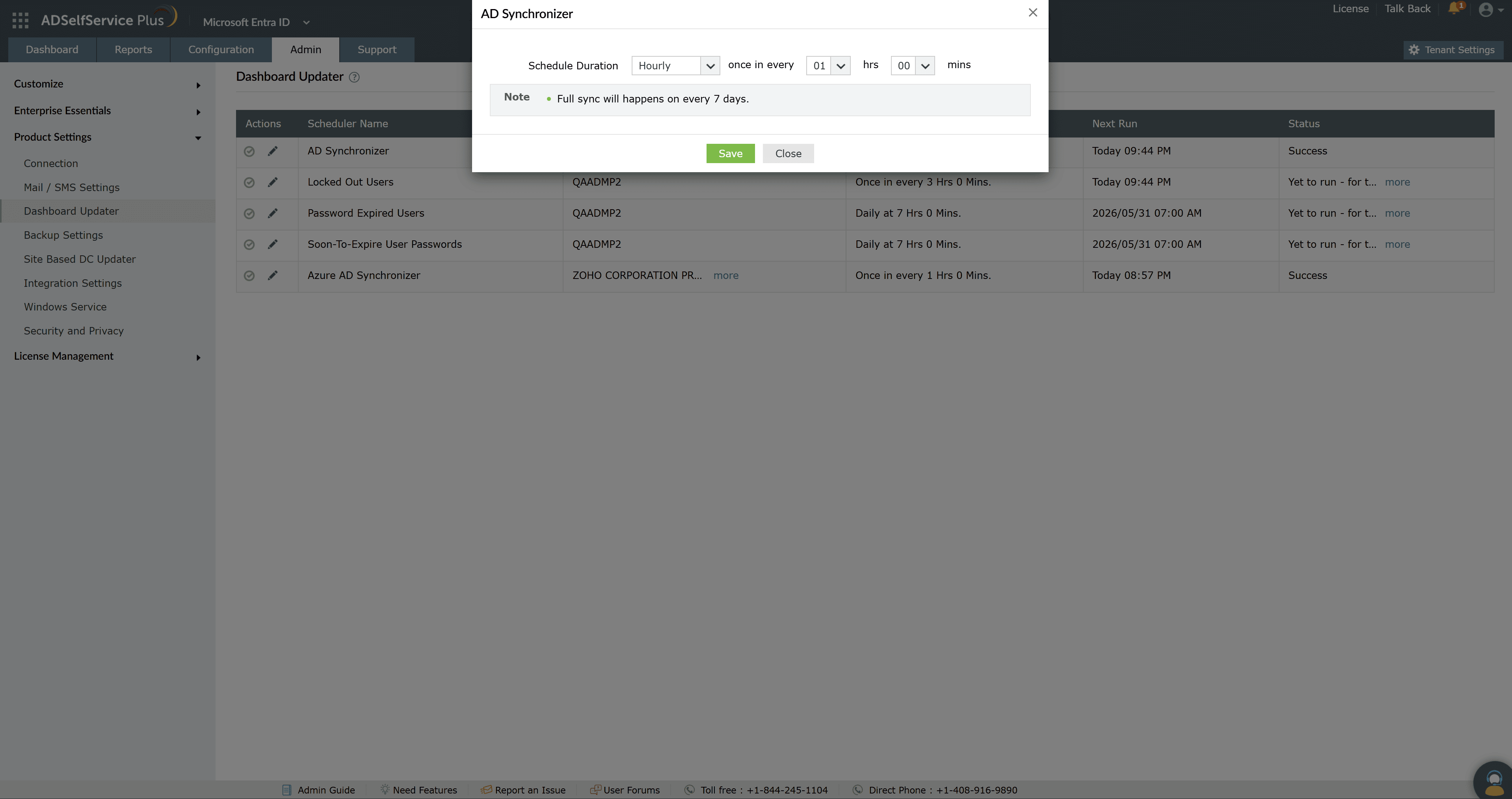
- Click the Edit icon next to the scheduler you want to modify.
- Set Schedule Duration to the frequency you want.
- Set the time fields shown for the selected frequency.
- Click Save.
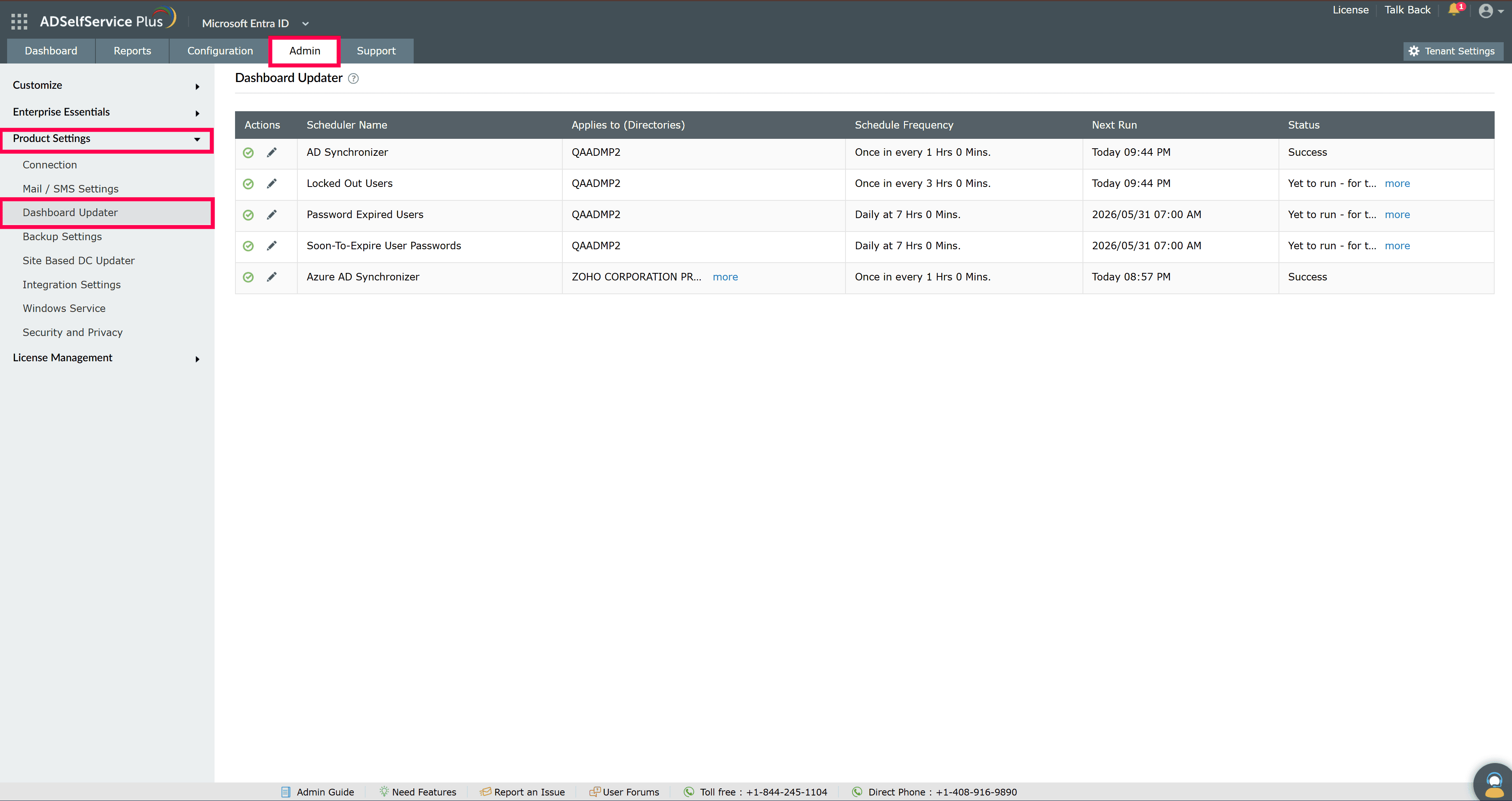
Fig.1: Configuring the Dashboard Updater in ADSelfService Plus.
Schedulers you can configure
ADSelfService Plus provides a predefined set of schedulers:
| Scheduler | What it updates |
|---|---|
| AD Synchronizer | Synchronizes ADSelfService Plus with your Active Directory domains. A full synchronization runs every 7 days. |
| Locked Out Users | Refreshes the list of currently locked out user accounts. |
| Soon-To-Expire User Passwords | Refreshes the list of users whose passwords are about to expire. |
| Password Expired Users | Refreshes the list of users whose passwords have already expired. |
| Microsoft Entra ID Synchronizer | Synchronizes ADSelfService Plus with a configured Microsoft Entra ID tenant. Appears when a tenant is configured. |
| Note: The AD Synchronizer runs a full synchronization every 7 days. This is in addition to the runs at your configured frequency. |
|---|
Enabling or disabling a scheduler
You can turn a scheduler on or off without changing its schedule:
- In the scheduler's row, click the status icon in the Actions column. When the scheduler is enabled, the icon shows a tick and its tooltip reads Disable. Click it to stop the scheduler from running.
- To turn the scheduler back on, click the same icon again. Its tooltip then reads Enable.
| Note: While a scheduler is disabled, its Edit icon is greyed out and its dashboard data is not refreshed. Enable the scheduler again before changing its schedule. |
|---|
Tips
- Refresh fast-changing data more often. A short interval for Locked Out Users keeps the dashboard close to real time.
- Run heavier jobs at off-peak hours. Schedule the AD Synchronizer less frequently, or at night, to limit load on your domain controllers.
- After editing a schedule, check the Next Run and Status columns to confirm the scheduler runs as expected.